Hot, dry summers in Eastlake can make your backyard feel more like an oven than an oasis. You want a space that looks great, stays comfortable, and uses water wisely. With the right mix of shade, permeable hardscape, low‑water plants, and smarter irrigation, you can create an inviting outdoor room that thrives in our climate. This guide walks you through the essentials so you can plan confidently and start making progress. Let’s dive in.
Know Eastlake’s climate and site
Eastlake sits in a warm Mediterranean climate with mild, wetter winters and long, dry summers. Rainfall is low each year, and summer evaporation is high, so landscapes rely on irrigation for much of the year. Designs that lower surface temperatures and reduce evaporation will stretch every gallon further.
Many yards in Eastlake were built on engineered fill, which can leave soils compacted. You might find areas that drain quickly and other spots that pond after a storm. Take time to understand your microclimates: hot west or southwest exposures, cooler north sides, reflected heat near walls or paving, and wind corridors.
Map sun, wind, and drainage
- Walk the yard at different times to note where afternoon sun hits hardest.
- After a rain, look for puddles or fast-draining zones and mark them.
- Stand in your seating area to feel breezes and plan openings that capture airflow.
- Test a few spots with a shovel: if soil is hard and slick, plan to amend with compost.
Plan by hydrozones
Hydrozoning groups plants by water need and irrigates each zone separately. This prevents overwatering low‑need plants just to keep a single thirsty spot alive. Create three basic zones: high (edibles or a small lawn), moderate (accent plants or seasonal color), and low (native and Mediterranean shrubs).
If you keep lawn, size it to a clear function like play or a pet area. A smaller, purposeful lawn is easier to water efficiently. If you remove turf, replace it with permeable surfaces and low‑water plants rather than a continuous nonpermeable patio.
Add smart, layered shade
Shade is your first defense against heat and high water use. Combine living shade with structures so you get comfort now while your plants mature.
- Trees: Choose species suited to our region that need low water once established. Place them to shade west and southwest exposures and to canopy seating areas.
- Structures: Pergolas, louvered roofs, and shade sails bring immediate relief. Open slats help reduce heat buildup and allow filtered light for plants below.
- Vertical screens: Trellises with drought‑tolerant vines can block afternoon sun and improve privacy. Keep airflow open to avoid heat traps.
- Passive cooling: Use lighter hardscape colors and orient seating to catch breezes. A simple fan under a pergola can make summer evenings far more comfortable.
Choose water‑wise hardscape
Permeable surfaces help stormwater soak in and reduce runoff. They also keep the ground cooler than solid concrete.
- Permeable pavers, stabilized decomposed granite, gravel, or porous concrete are solid choices for patios and paths.
- Mix materials for comfort: a shaded deck under a pergola and DG or gravel in lower‑traffic zones.
- Shape the site to direct rain from downspouts into planted areas, shallow swales, or small rain gardens.
- For fire safety where relevant, use non‑flammable surfaces near structures and avoid high‑fuel plant massing close to the home. Follow local guidance on defensible space.
Pick low‑water plant palettes
A cohesive, simple plant list looks better and is easier to maintain. Focus on California natives and Mediterranean‑climate plants that thrive with low water once established.
Mediterranean and herb courtyard
- Canopy: small citrus or a compact ornamental tree if you can water during establishment.
- Structure: rosemary hedges and lavender for evergreen form and fragrance.
- Accents: olives in large containers, agaves, and ornamental grasses.
- Groundcover: thyme or Dymondia margaretae to fill sunny gaps.
Native Southern California garden
- Feature: manzanita (Arctostaphylos) or a native oak where space allows.
- Shrubs: Ceanothus, toyon, and native sages (Salvia spp.).
- Grasses: deer grass (Muhlenbergia rigens) or other native bunchgrasses.
- Perennials: California fuchsia and buckwheats (Eriogonum spp.) for seasonal color and pollinators.
Succulent and xeric contemporary
- Sculptural plants: Agave, Aloe, Dudleya, and other succulents.
- Shrubs: Westringia and Santolina for clipped structure.
- Finish: gravel mulch with boulders for texture and drainage.
Additional plant ideas for Eastlake
- Trees and large shrubs: manzanita, toyon, Western redbud, and olive (consider cold and soil conditions).
- Shrubs: Ceanothus, Westringia fruticosa, lavender, rosemary, Salvia leucantha, Artemisia, and Euphorbia.
- Perennials and accents: buckwheat, Penstemon, yarrow, plus Agave and Aloe varieties.
- Grasses and groundcovers: deer grass, California fescue, Dymondia margaretae, and native bunchgrasses.
Plant by microclimate. Heat‑tolerant species go in west and south exposures, while partial‑shade tolerant plants nestle on the north side of walls or fences. Water needs drop significantly after establishment. Most drought‑tolerant plants need regular watering for the first 1 to 3 years, then only occasional irrigation depending on weather and placement.
If you consider artificial turf, plan for heat and drainage. It can feel much hotter than natural materials and needs proper base and cleaning. Groundcover mixes or stabilized DG play areas often offer better comfort and permeability.
Upgrade to efficient irrigation
You can save water without sacrificing plant health. Start with the layout, then move to the hardware and schedule.
- Drip and micro‑irrigation: Use drip tubing, point emitters, or micro‑sprays in planting beds. Subsurface drip works well where appearance and evaporation are concerns.
- Pressure regulation and filtration: Pressure‑compensating emitters and regulators keep flow uniform. Add filters if your water has particulates that clog emitters.
- Mulch and soil building: Two to four inches of organic mulch reduces evaporation and moderates soil temperature. Keep mulch away from stems and trunks. Incorporate compost to improve water retention and infiltration.
- Seasonal scheduling: Dial irrigation back or off in winter and increase in summer. In hot months, increase frequency and shorten run times to limit runoff.
Smart controllers and sensors
Weather‑based controllers adjust schedules automatically and often qualify for rebates. Look for recognized water‑efficiency certifications. Soil‑moisture sensors add accuracy, and flow sensors can alert you to leaks or broken lines. Even with smart tech, plan a seasonal walk‑through to confirm plant health and system performance.
Maintenance that pays off
- Inspect each season and after storms to fix leaks, clean filters, and replace clogged emitters.
- Flush drip lines as needed and verify pressure at the farthest runs.
- Prune for plant health and airflow, not tight shapes that stress plants.
- Replace high‑maintenance or thirsty specimens with lower‑water alternatives over time.
Capture and reuse your water
- Rain barrels: Collect roof runoff for container plants or spot watering. They are simple to add and often rebate‑eligible.
- Graywater: Laundry‑to‑landscape systems can supplement irrigation if installed correctly and in line with regulations. Keep graywater off edible parts of crops.
- Stormwater: Direct downspouts toward bioswales or small rain gardens that slow, spread, and sink water into the soil.
Know the rules and incentives
Before major changes, check your water provider for current conservation rules and available rebates. Many local agencies support turf removal, smart controllers, rain barrels, and efficient irrigation upgrades. If you live in an HOA, review design guidelines for visible changes and get approvals early.
California’s Model Water Efficient Landscape Ordinance applies to new landscapes and some renovations. For hardscape, grading, drainage, or structures like pergolas and retaining walls, confirm City of Chula Vista permit requirements before work begins.
A simple Eastlake layout idea
Picture a backyard with three clear zones:
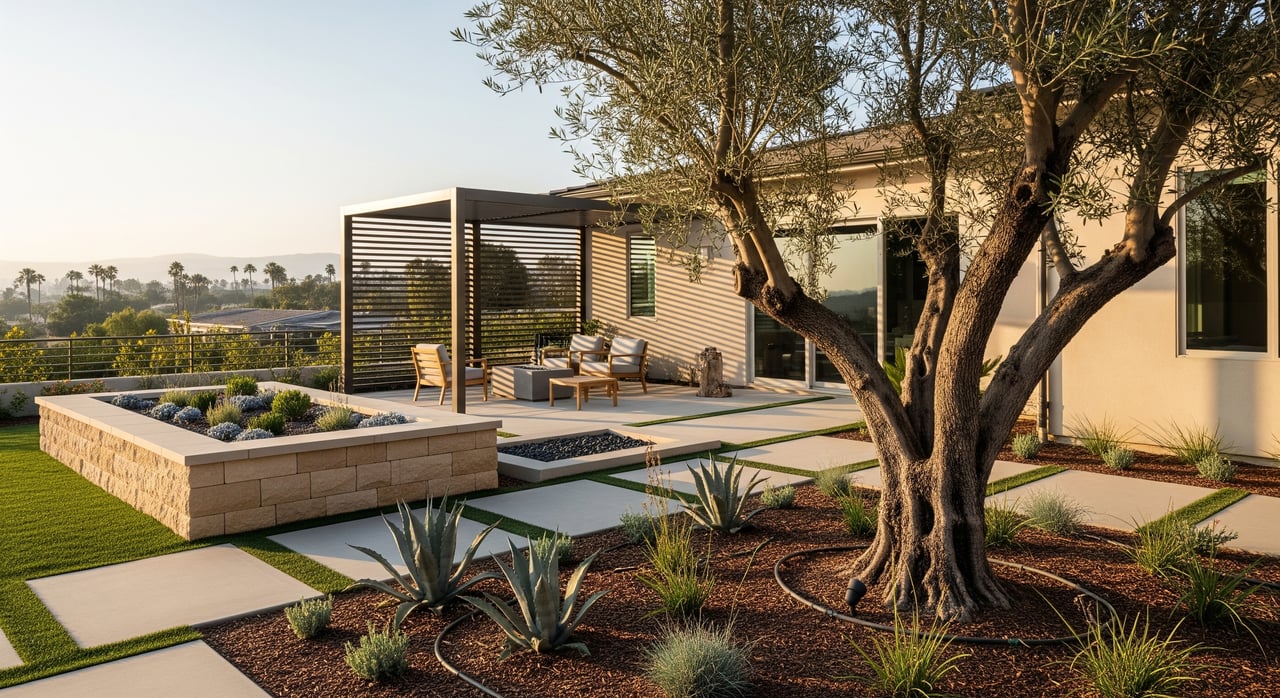
- A shaded living area: A 12 by 20 pergola over permeable pavers with a fan and lights for evening use. A trellis on the west edge blocks low sun and frames views.
- A low‑water planting belt: Drip‑irrigated beds around the patio with manzanita, Ceanothus, rosemary, and deer grass, all on a low‑water zone. Gravel mulch or Dymondia fills gaps and keeps weeds down.
- A compact lawn or play court: A small, rectangular turf panel sized for games, or a stabilized DG play area that stays permeable. A recirculating fountain adds sound without wasting water.
Run downspouts to a shallow swale that feeds the planting belt. Use lighter hardscape colors to reduce heat and place seating where breezes naturally move through the yard.
Step‑by‑step plan to start
- Identify your water provider and confirm current rebates for turf removal, smart controllers, and irrigation upgrades.
- Map sun, shade, slopes, wind, and drainage. Note HOA rules and any views you want to frame or screen.
- Prioritize the biggest wins: add shade where you sit, reduce lawn where you do not use it, and swap solid surfaces for permeable options.
- Improve soil and lay mulch. Design a zoned drip system that fits your hydrozones.
- Choose one plant theme and keep the list tight for a cohesive look. Lean on local nursery and Master Gardener resources to refine the species.
- Phase the work: tackle irrigation and mulch first, then plant in sections so you can learn what thrives in each microclimate.
Keep it comfortable and low‑maintenance
A drought‑smart yard should be easy to use and care for. Space plants correctly so they grow into their spots and require less pruning. Combine evergreen structure with seasonal accents so the garden looks good year‑round. Use containers sparingly and on drip, since pots dry out faster than in‑ground beds.
Finally, watch how the garden performs through the seasons. Small adjustments to shade, mulch, and run times can make a big difference in comfort and water use.
Ready to plan a drought‑smart Eastlake backyard that boosts comfort and long‑term value? If you want practical guidance on which improvements pay off before you sell, or you need contractor referrals and a phased plan, let’s talk. Let’s Connect — Request a Free Consultation with Unknown Company.
FAQs
How does Eastlake’s climate affect landscaping?
- Eastlake has mild, wetter winters and long, hot, dry summers with low annual rainfall. Designs that add shade, improve soil, and use drip irrigation help reduce evaporation and water use.
What is hydrozoning and why use it?
- Hydrozoning groups plants by water need and irrigates each group separately. It prevents waste and keeps low‑water plants healthy without overwatering them.
Which low‑water plants work in Eastlake?
- California natives like manzanita, Ceanothus, and deer grass, plus Mediterranean choices like rosemary, lavender, Agave, and Aloe, typically perform well once established.
Are smart irrigation controllers worth it here?
- Yes. Weather‑based controllers often reduce overwatering by adjusting schedules for actual conditions. Many local water agencies offer rebates that shorten payback time.
Do I need permits for backyard changes in Chula Vista?
- Simple plant and irrigation swaps usually do not, but structures, major grading, drainage changes, and large hardscape projects may. Check City of Chula Vista requirements and coordinate with your HOA.